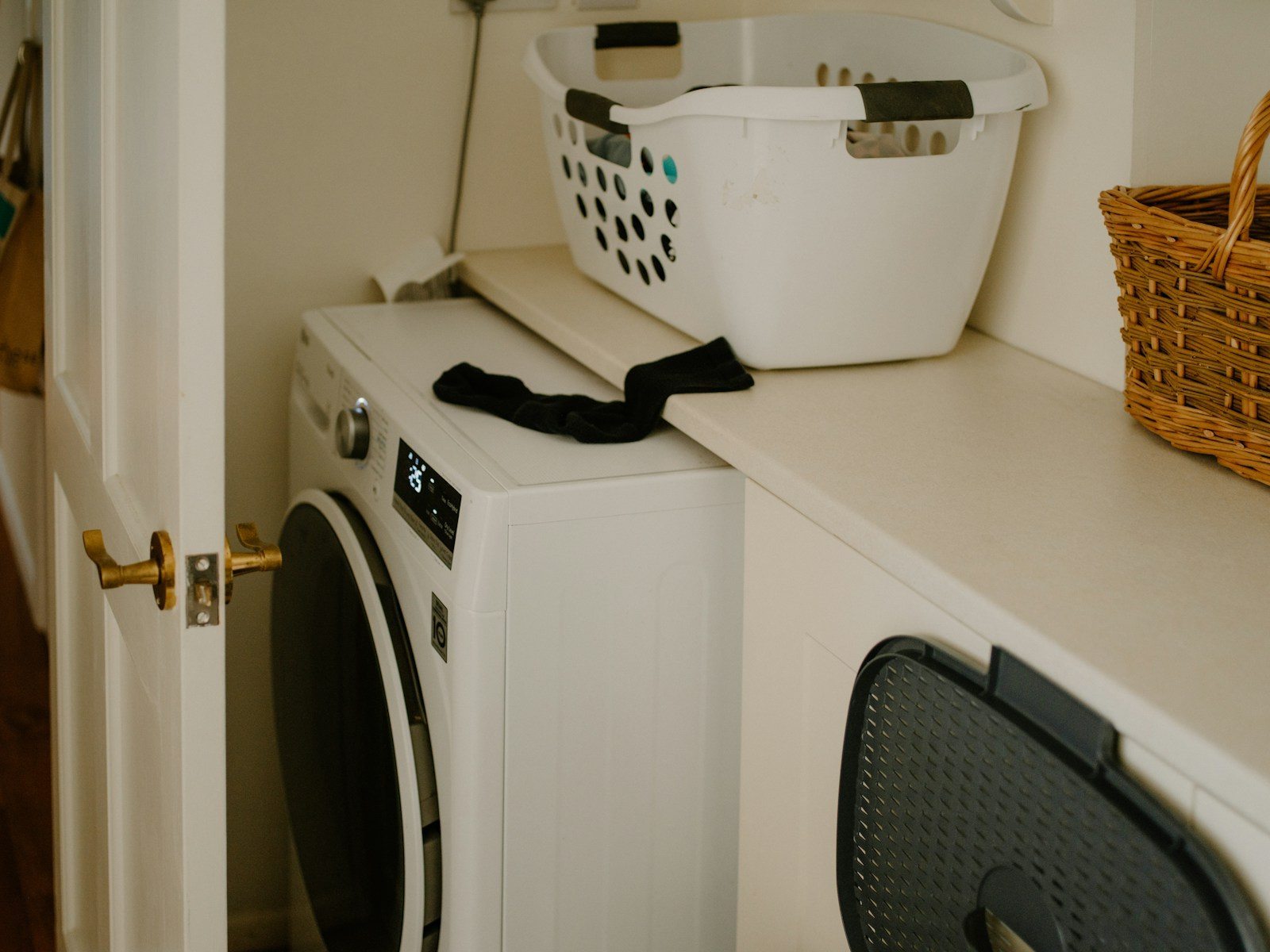
Laundry occupies several places even when there is no room named after it. Clothes leave the wardrobe, land on a chair, enter a basket, travel to a machine, return clean, and sometimes spend three days on the bed. The useful question is where that journey stalls. For one ordinary laundry cycle, follow the clothes instead of shopping for a bigger hamper. Your result will be a small route map and one change you can test.
A FEW THINGS TO TAKE WITH YOU
- Separate waiting to wash, being washed, and waiting to put away.
- Use your actual cycle to estimate basket capacity; basket volume does not determine a machine's safe load.
- Fix the longest pause before adding another container.
First, watch one complete cycle
Start just after you put a load away. On paper, draw five boxes: worn, waiting, washing, drying, returned. Over the next cycle, write where each stage happens. You might discover that the waiting stage occupies three chairs while the official basket sits inside an awkward cupboard. Record the real locations without rearranging them yet.
Beside each arrow, note the action that moves clothes forward. Someone books the shared machine, carries a bag downstairs, clears a drying area, or folds a load. A task with no usual owner can stall even when all the equipment is available. If you share the home, describe the task before deciding who should do it.
You are observing a particular week, not producing a permanent verdict on your habits. A busy work period or a broken building machine can make the route unusual. Note those conditions so you do not buy storage to solve a temporary interruption.
The chair may be holding two different queues
Look at the clothes that never quite reach the basket. Some need washing. Others are intended for another wear. Combining both groups on one chair forces you to make the same decision again every morning. If this is your bottleneck, choose a small, definite place for the second group and agree what belongs there.
Keep the arrangement simple enough to maintain while tired. One designated shelf may work; five categories of partial wear probably require more attention than the problem deserves. Decide what happens when the space fills. The rule could be to review those items before taking anything else from the wardrobe.
Clothing care still follows its label and the relevant equipment instructions. This experiment changes the route through your home; it does not determine which fabrics can be combined, washed, or dried together.
A capacity example, with the assumptions visible
Suppose one person's observations show that three ordinary days fill roughly half of their existing basket. Assume the same clothing pattern continues and they normally do laundry every six days. That suggests one basket covers the waiting stage in this example. It does not tell them how much should go into a washing machine; that is a separate question governed by the machine and garments.
If the same person can only reach a laundromat every nine days, the holding space and transport plan need revisiting. A second bag might help, but so might changing the schedule. Measure what you need to carry and where it waits before choosing an attractive hamper. Include the trip back with clean clothes, when the original basket may already contain the next queue.
| Observed pause | A change to test | What to record |
|---|---|---|
| Clothes miss the basket | Move the basket to the actual changing area | Fewer items left elsewhere? |
| Clean clothes have no return container | Reserve an existing clean bag for the return trip | Does the load reach its next stop? |
| Folding waits for a clear bed | Choose a different usable surface or time | How long does the clean load wait? |
| Putting away stops at an overfull drawer | Make room for that clothing category | Can one load be returned without reshuffling? |
Change one link, then run the route again
Pick the pause that creates the most repeated work. Do not change the basket, washing schedule, folding method, and wardrobe at the same time. With one change, you can tell whether the adjustment helped or simply moved the pile into another room.
Keep the route usable for everyone. Temporary bags, racks, and baskets need places that leave doors, walking paths, and necessary access clear. If your arrangement depends on moving the same basket five times a day, that movement belongs in the evaluation. A smaller container in the right place may serve you better than extra capacity in the way.
Keep a route card, not a complicated schedule
Finish with four lines: worn clothes go here; washing starts when this condition is met; clean clothes return in this container; putting away happens at this point. Add an owner for shared tasks and a fallback when the usual machine or time is unavailable.
After another cycle, compare the waiting time and the number of stray piles. Keep the change only if it makes ordinary laundry easier. The experiment succeeds when clothes move through the home with fewer repeated decisions, even if your containers do not match.
About this guide
This guide provides planning prompts and comparison criteria. It does not report product tests or results from a real household.
This guide offers general home-planning ideas. Product instructions and your own rental agreement take precedence. How we approach our guides.