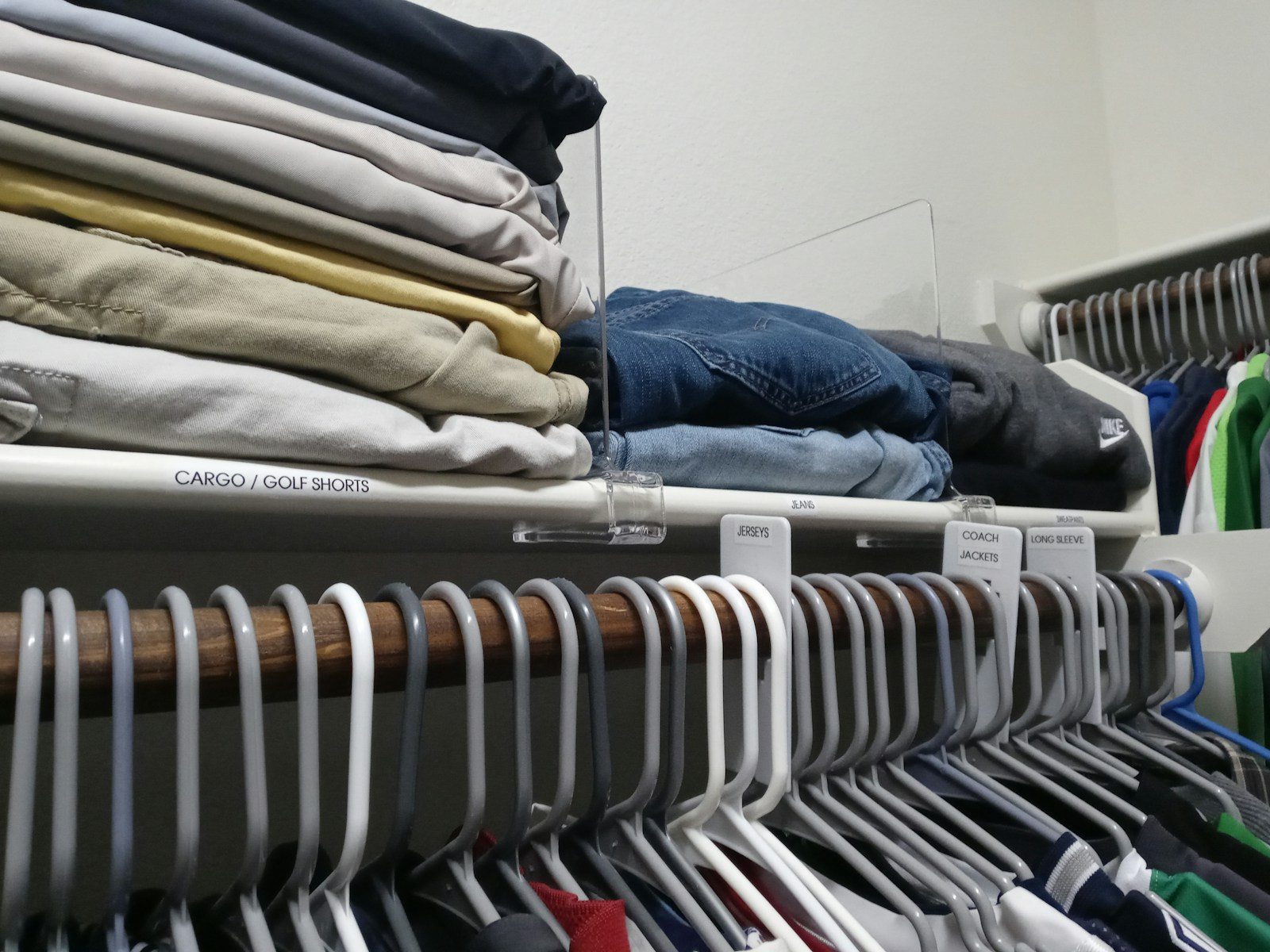
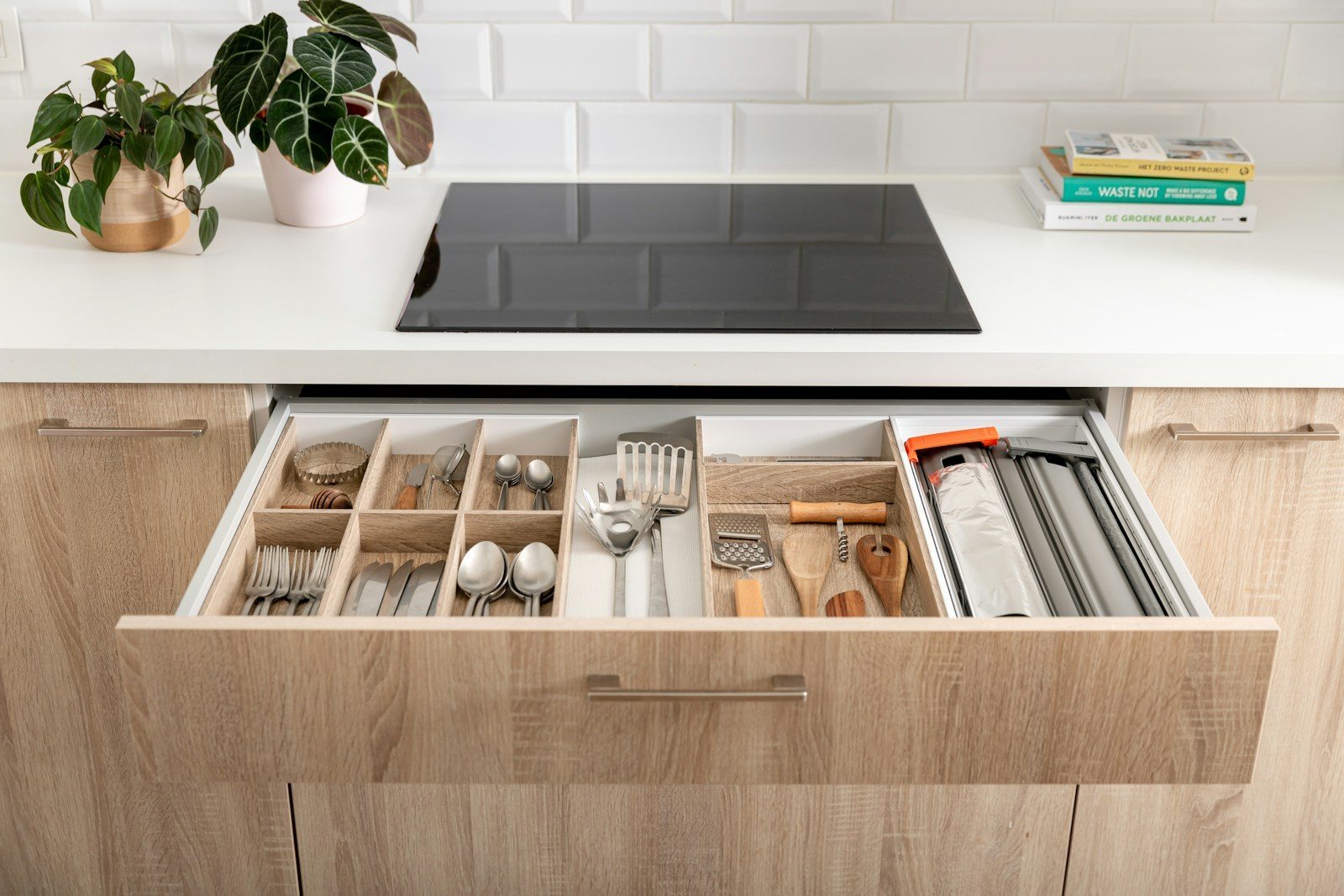
A rental kitchen's cupboards may not be where you would have put them, and its drawers may be smaller than you expected. You can still make the room easier to use by storing things around the meals you actually prepare. Begin with one normal breakfast or dinner, notice each repeated reach, and rearrange the movable contents before investing in organizers.
A FEW THINGS TO TAKE WITH YOU
- Group items by the task they support, not by how matching containers look.
- Measure internal cupboard space and door openings before buying inserts.
- Test the arrangement through a normal week before adding storage.
Follow one meal through the room
Think through the last meal you made. Where did you put the ingredients, find a knife, wash produce, reach for a pan, and place the finished food? Write down the moments that involved unnecessary searching or moving a pile. Those are the first problems to address.
Choose one counter area for preparation that suits the existing kitchen. Keep enough clear space there for the board and ingredients you normally use. Place unrelated mail, spare decor, and occasional appliances elsewhere if they repeatedly occupy that working area.
A meal trace you can copy
Take a simple meal you make often and describe the next action at each stage. The example below imagines a pasta dinner; it is a planning exercise, not an observed household. The interesting detail is not the recipe. It is the moment an unrelated object has to move before the next task can begin.
Mark each interruption as searching, reaching, or clearing. Searching points toward identification or grouping. Reaching may suggest a different location. Clearing suggests that another activity has claimed the working surface. Those three problems can look like the same cluttered counter, but buying a box will not address all of them.
| Next action | Illustrative interruption | A change to test |
|---|---|---|
| Put ingredients beside the board | Mail covers the preparation space | Give paper a landing place outside this work area |
| Retrieve the pan and lid | The matching lid is behind occasional equipment | Store the everyday pair so both can be reached |
| Drain and serve | The needed serving item is in an unrelated cupboard | Move that item into the regular serving group |
| Put away leftovers | Several lids have no matching base | Pair the containers before buying more |
Sort one cupboard at a time
Empty one manageable area, check what is inside, and return the items you use there. Group duplicates so you can decide how many you need accessible. Keep borrowed or landlord-owned items clearly identified and follow your rental arrangements for their storage; do not discard them with unwanted personal belongings.
Put frequently used items where you can reach them comfortably. Store heavier cookware on suitable lower shelves within the furniture's load limits, while keeping items that need to be inaccessible to children in an appropriate secure location. Do not turn the top of a cabinet into a precarious overflow area.
Build practical task groups
You do not need enough space for a separate zone for every activity. Think of these as groups of objects that should be easy to retrieve together. Adjust them to the existing cupboards and your household's routine.
| Activity | Items to group | What to check |
|---|---|---|
| Preparing food | Boards, mixing bowls, measuring tools | Easy access beside the usable preparation area |
| Cooking | Pans, lids, everyday utensils | Suitable storage that stays clear of cooking heat |
| Serving and clearing | Everyday dishes, cutlery, storage containers | A convenient route from eating area and washing-up space |
| Breakfast or drinks | Mugs and the supplies you use together | Counter space and appliance instructions |
Measure before adding an organizer
Measure the cupboard's internal width, depth, and usable height, then measure the opening. Hinges, pipework, shelf supports, and the door itself can make an insert difficult to place even if its listed dimensions seem suitable. Leave room to grasp the things inside, not just fit them in.
Test the idea with an existing container first. If a shallow box improves access to small packets, you have a useful reason to buy a durable version. If a shelf riser would simply create room for more items you do not use, finish sorting before adding it. Follow load limits and stability instructions for any insert.
Make containers earn their space
Matching containers are optional. Keep original food packaging when it is already practical, especially if it carries information you need. If you transfer food into a suitable food-storage container, retain the product identity, relevant date information, allergen details, and preparation or storage instructions. A neat shelf is less useful when nobody can identify its contents.
For reusable food containers, keep compatible lids together and check that each base has a usable match. Store them so you can remove one without disassembling a tower. Keep cleaning products in their original labeled containers and stored appropriately, separate from food.
Run a week-long test
Use the arrangement for ordinary meals. Note which items keep migrating to a different cupboard or counter. Sometimes the habit reveals a better home for an object; sometimes it reveals that the designated storage is too full or awkward to reach.
Finish the test by choosing a simple reset: clear the preparation area, return the everyday tools, and check what needs using or replacing. Buy an organizer only for a problem that remains specific. The aim is a kitchen you can cook in and reset without rearranging the whole room.
Try the same meal again before changing a second cupboard. Note which interruption disappeared and which one simply moved elsewhere. If the preparation area stays clear but the dining table now collects the mail, the kitchen change needs a companion paper routine. A local improvement is useful only when it does not export the same problem to the next surface.
About this guide
This guide provides planning prompts and comparison criteria. It does not report product tests or results from a real household.
This guide offers general home-planning ideas. Product instructions and your own rental agreement take precedence. How we approach our guides.