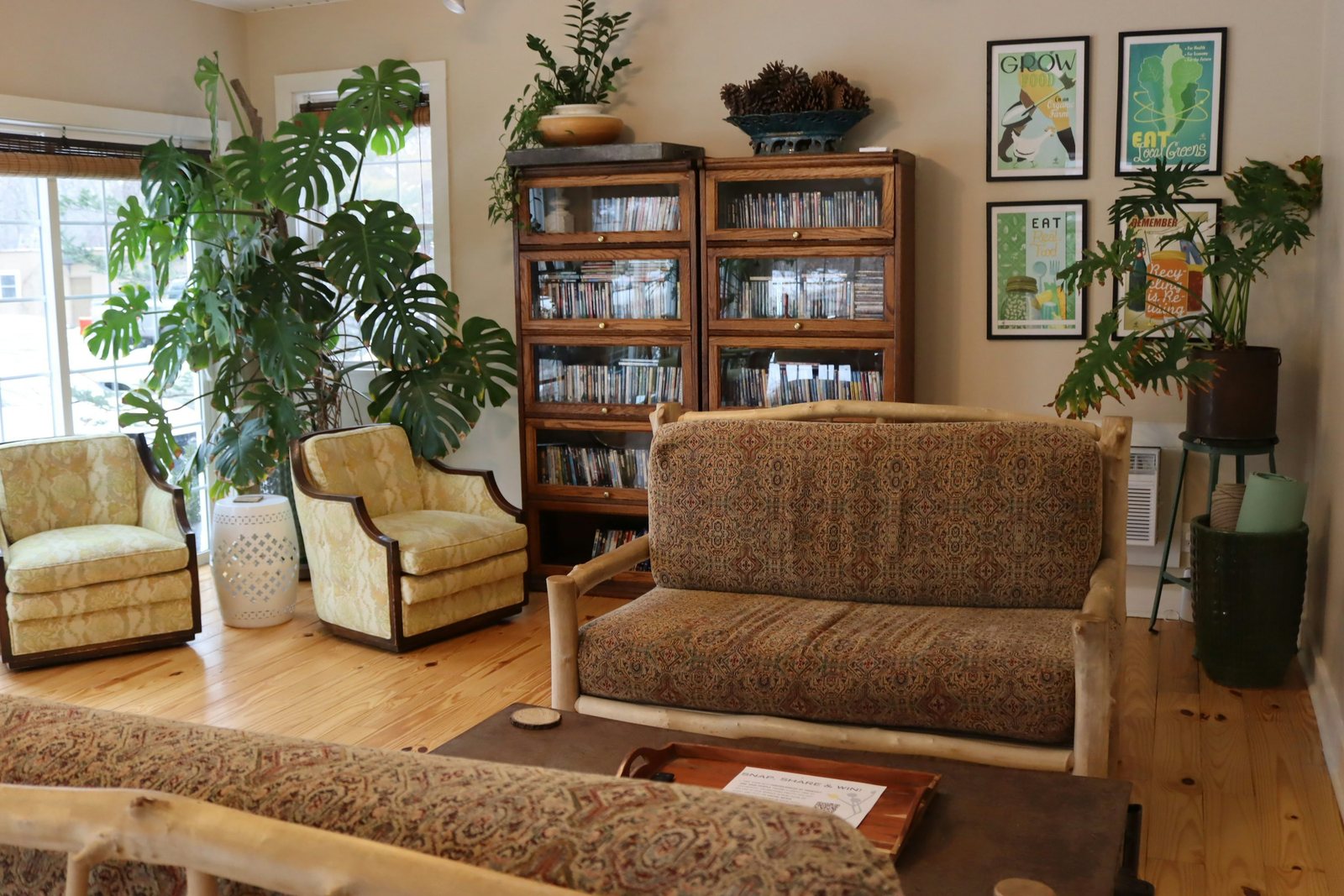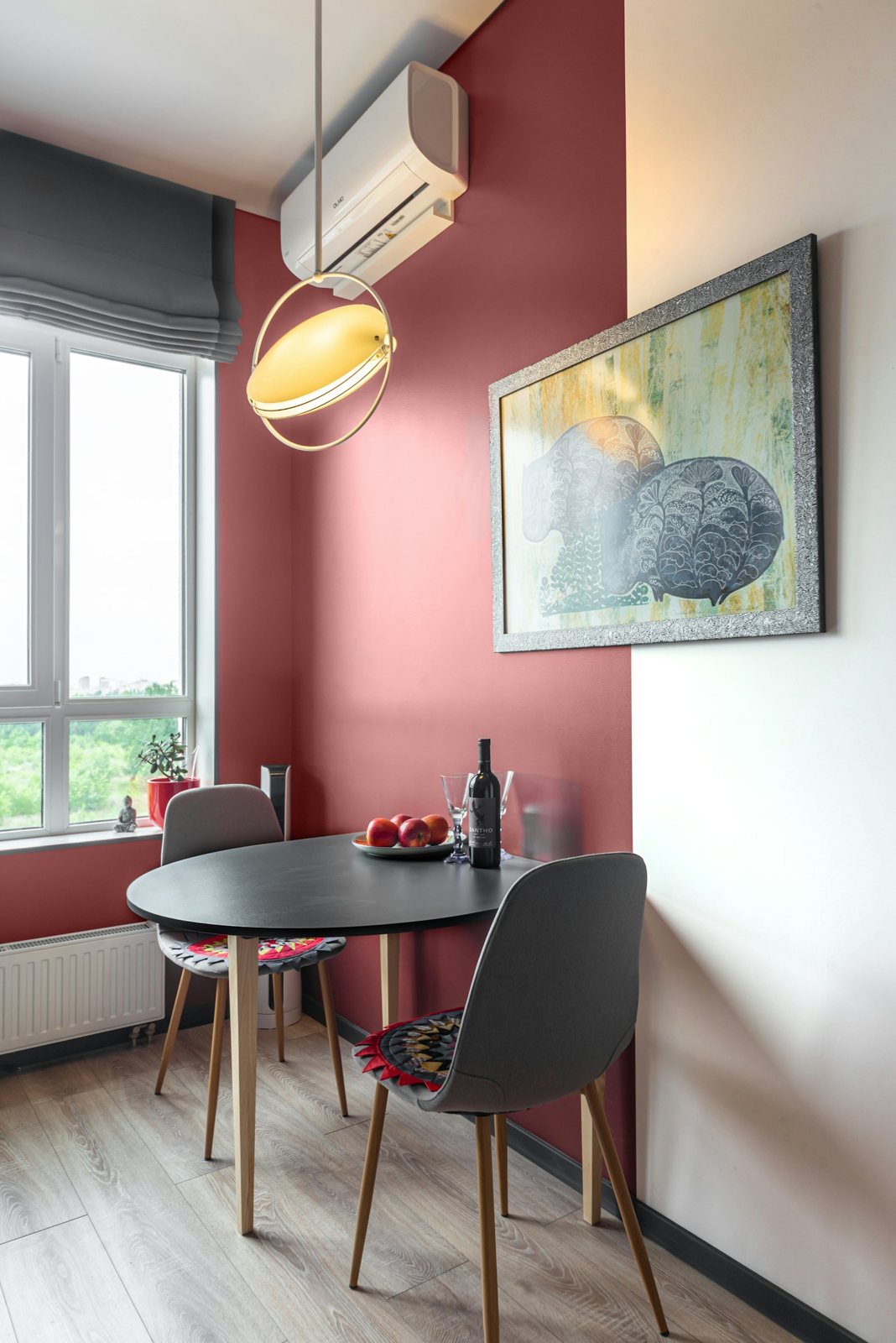
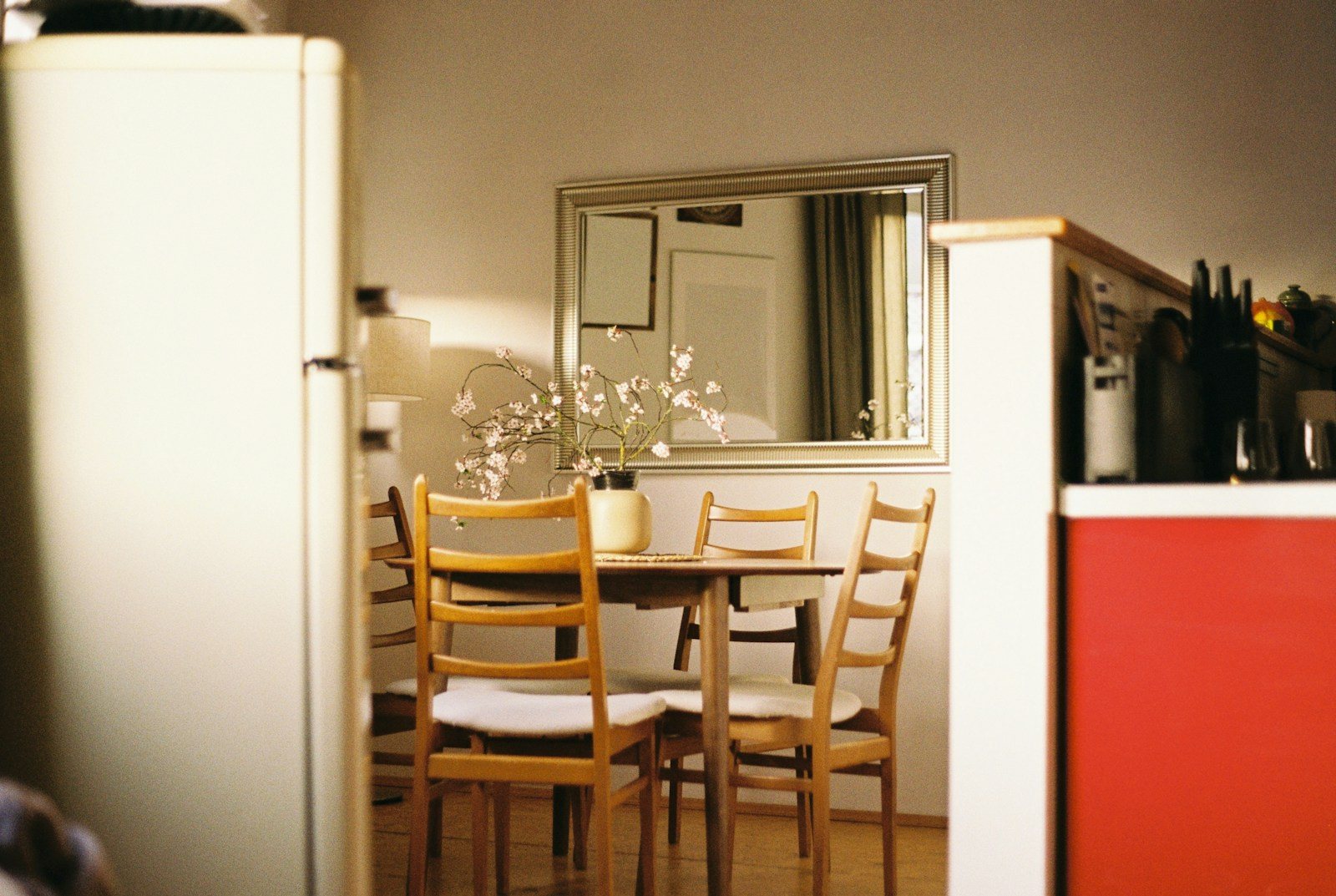
For this example, four people means you and three guests. The apartment has a two-seat sofa, two suitable chairs, a small table, and a compact kitchen. There is no separate dining room and no plan to buy furniture for the occasion. The gathering is a relaxed evening with conversation and a simple meal chosen around everyone's needs. The design task is not to squeeze a dinner party photograph into the room. It is to let people arrive, settle, eat, move, and leave without the host repeatedly dismantling the apartment.
This is an illustrative plan for four people in total, including the host. Adjust it to guests' needs and the actual home.
A FEW THINGS TO TAKE WITH YOU
- Count usable seats and eating surfaces separately; a place to sit is not automatically a comfortable place to eat.
- Give coats, bags, serving items, and used dishes destinations before guests arrive.
- Plan the gathering format around the room you have and the people coming.
Two days before: choose the shape of the evening
Ask what the gathering is mainly for: a meal, a game, a film, or conversation. Let that answer decide the central arrangement. A board game needs a shared surface everyone can use. A film needs workable views. A meal needs a suitable place for each person to eat. Four seats scattered around a room do not automatically satisfy all three requirements.
Check with guests about practical needs, including seating, access, and food requirements. Do not assume everyone is comfortable on the floor or able to balance a plate on their lap. If your room cannot support the planned meal comfortably, change the format before invitations become a complicated promise. An afternoon visit with suitable refreshments can be just as intentional as a full dinner.
The day before: give the evening four destinations
The example apartment needs a place for incoming belongings, a place for people, a place to serve, and a place for used items. These can be zones within existing furniture, but they should not all depend on the same square of tabletop. If the coffee table holds dinner, coats, and the game at once, the host becomes a permanent furniture coordinator.
Choose destinations that preserve ordinary routes and access. Put household clutter into its actual storage, not into an already crowded bedroom where guests will later need to retrieve coats. Keep private items private without turning an entire usable room into a hiding place for unfinished sorting.
| Destination | Arrangement in this example | Question to check |
|---|---|---|
| Arrival | A cleared suitable area for bags and coats | Can everyone retrieve their own belongings? |
| Conversation | Sofa and two chairs facing the group | Can each guest sit and get up comfortably? |
| Serving | A clear section of the kitchen worktop | Can the host use it without moving guests? |
| Used items | An assigned kitchen area | Will cleared dishes block the next task? |
That afternoon: rehearse the evening in ordinary clothes
Sit in every proposed seat. Put an empty plate and a glass where a guest would use them, and imagine getting up to visit the bathroom. This is a furniture test, not a styled photograph. A small side table may work for a drink but be unsuitable as a dining surface. Borrow appropriate furniture if necessary and practical, or revise the meal format. Do not improvise seating from storage boxes or unsuitable surfaces.
Walk the host's route too: kitchen to serving area, serving area to seat, seat to used-dish destination. Remove unnecessary objects from those routes while maintaining access to doors and required exits. The aim is not maximum density. It is a room in which a person can move without asking three other people to stand every time.
Thirty minutes before: finish the room, then stop styling
Set out the items that support the agreed format: enough suitable place settings, reachable napkins, and a clear place for drinks. Put frequently used serving items where you can find them. Follow appropriate food-handling guidance for your chosen menu; this room-planning example does not replace it. Check the bathroom and the entry area so your attention can stay with guests once they arrive.
Now stop adding decorative objects to working surfaces. A vase may look attractive but become an obstacle if the table has only one practical spot for a serving dish. Choose one decorative gesture that does not compete with the evening: a favorite textile already on the sofa, a piece of art, or the ordinary lighting arranged well. The room does not need to announce how much preparation happened.
During the evening: change the room once, if at all
Try to avoid a sequence in which every stage requires moving everything. If the gathering begins with a meal and continues with conversation, decide beforehand which items will leave the table and where they will go. A tray can carry appropriate small items together, but it is not a substitute for a destination. Leave room for the used tray when the transition is complete.
Tell guests the simple practical things they need to know: where bags can go, which surface is free, and where to place used dishes if they want to help. There is no need to apologize for the size of the apartment. Clear directions are more useful than a running explanation of what a larger home would have offered.
The next morning: keep one useful lesson
Restore the everyday arrangement and note the single bottleneck you actually encountered. Perhaps bags were difficult to retrieve, one chair was rarely used, or the meal needed more suitable surface space. Separate that observation from the vague feeling that the apartment should be bigger. A specific difficulty can change the format of the next gathering without triggering a furniture shopping list.
Also record what worked: guests could hear each other, the host could sit down, or cleanup had a clear path. Keep those parts. Occasional hosting should not force your daily home to live permanently in guest mode. The successful version is the evening you can repeat with confidence and then comfortably put away.
About this guide
This guide provides planning prompts and comparison criteria. It does not report product tests or results from a real household.
This guide offers general home-planning ideas. Product instructions and your own rental agreement take precedence. How we approach our guides.