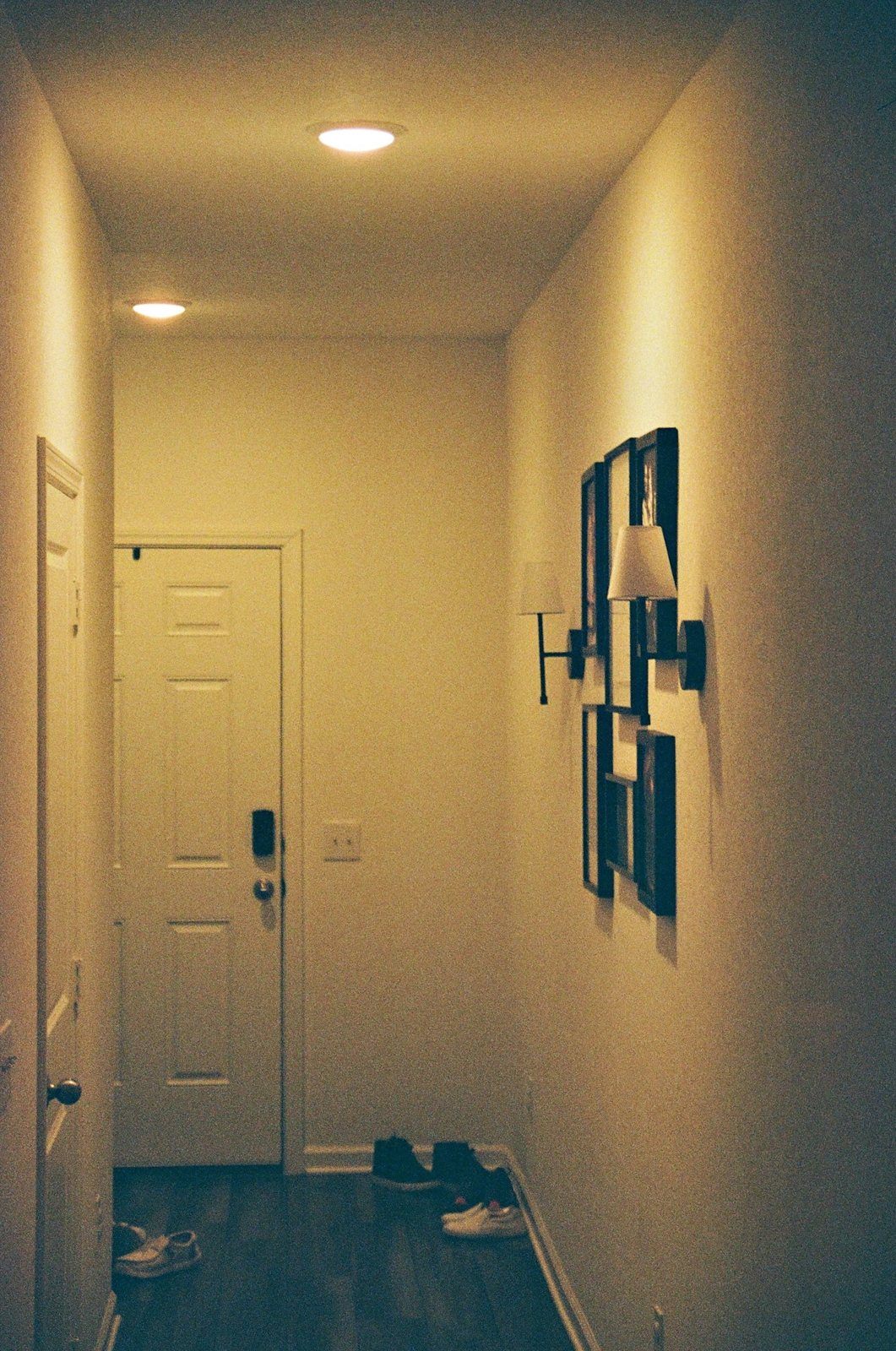
An entryway does not have to be a piece of furniture. It can be the first reachable surface beyond the door, an existing cupboard shelf, or a small arrangement farther inside the room. Start by following an arrival with a bag in one hand. What do you need to put down before you can do anything else? The answer helps you choose between a landing surface, shoe storage, and a bag position instead of buying all three.
A FEW THINGS TO TAKE WITH YOU
- Observe what arrives at the door before choosing storage.
- Keep the door swing and walking route completely usable.
- No-drill products still need surface, load, and permission checks.
Start with an arrival list
For a few normal days, note what comes through the door: keys, a work bag, wet shoes, parcels, a dog lead, or a coat. Separate daily items from occasional ones. A small entrance does not need to hold every shoe and jacket you own; it needs enough space for the current routine.
Give each household member a realistic share. If two people arrive together, consider whether both can enter before anyone stops to put things away. That brief moment is a more useful design test than the amount of empty wall available.
Let the first object choose the first solution
On your next arrival, notice the order in which belongings leave your hands. If keys land safely but the shopping bag blocks the door, a decorative key bowl is not the urgent improvement. If shoes are already contained but post disappears beneath them, you need a dry destination for paper. Solve the first repeated obstruction rather than copying a full hallway arrangement.
Try the same sequence on departure. A storage spot can be easy to fill and awkward to empty: a deep basket may swallow a small keyring, while a lid that needs two hands can be inconvenient when you are carrying a bag. Your arrival and departure tests should agree before you add another container.
| The first repeated problem | Prioritize | A reason to choose elsewhere |
|---|---|---|
| Small essentials disappear | A shallow, easy-to-see landing place | The only nearby surface belongs to someone else |
| A bag blocks the door | A suitable bag position beyond the door swing | A proposed hook is incompatible or too lightly rated |
| Wet shoes mix with papers | Separate wet and dry destinations | The proposed tray makes the route narrower |
| The door area works already | Leave it alone; improve the next transition | Buying a console would create a new obstacle |
Map the space the door actually uses
Open the front door and nearby cupboard doors fully. Measure the usable floor area after allowing for their movement, skirting boards, radiators, and access panels. Keep required exit routes clear. Do not treat a corner inside the door swing as storage space, even if a basket fits when the door is closed.
Try a cardboard footprint for any furniture you are considering, then walk past carrying a shopping bag. If the space feels pinched, move the landing place farther into the home. A small bowl on an existing living-room cabinet may work better than a console beside the front door.
Choose the smallest useful landing place
Use a surface you already own first. Add a shallow tray for loose essentials and one defined place for the bag you use most often. Avoid stacking containers on every available ledge: you still need room to set things down temporarily.
| Space available | A starting arrangement | Check before using |
|---|---|---|
| No free floor space | Tray on an existing nearby cabinet | Easy reach without blocking a route |
| A small clear corner | Low shoe tray and a stable small table | Door swing, trip hazards, and furniture instructions |
| A usable coat cupboard | Daily items grouped on existing shelves | Shelf load and access to other contents |
| A suitable interior door | Purpose-made over-door storage | Door thickness, clearance, and full closure |
Treat no-drill products as conditional tools
Adhesive hooks are not suitable for every wall. Check the specific product's surface requirements, weight limit, preparation instructions, waiting time, and removal method. Check your rental agreement and obtain any permission required for applying products to finishes. A removable label is not a guarantee that a particular painted surface will remain unmarked.
For example, 3M's Command FAQ advises against applying its products to wallpaper, says paint should be fully cured, and does not recommend combining hooks to exceed the listed load. Use the instructions supplied with the exact item you buy. An overloaded everyday bag is a poor match for a hook intended for light objects.
With an over-door organizer, confirm the door closes normally without pressure or rubbing. Do not modify a fire door or interfere with a closer, seal, lock, or latch. If you cannot confirm compatibility, choose storage elsewhere.
Give wet and temporary items a route out
Use a suitable tray for wet footwear and empty or clean it as needed for your flooring. Keep bags and papers away from that wet area. Place only the shoes currently in use near the entrance, with less-used pairs stored elsewhere.
Parcels and returns need a destination, not a permanent pile. Choose one temporary spot and attach the next action to it: open, recycle packaging, or take out on the next trip. If that spot overflows regularly, reduce the holding time before adding another container.
Test the setup on your way out
At the end of the week, try leaving with everything you normally carry. Can you find your keys without moving other belongings? Can everyone open the door easily? Are bags sitting where you expected, or consistently landing elsewhere?
Move the storage to match the habit where possible. The successful entryway is the one that quietly supports arrivals and departures, even when the rest of the home is busy.
Sources & further reading
This guide offers general home-planning ideas. Product instructions and your own rental agreement take precedence. How we approach our guides.