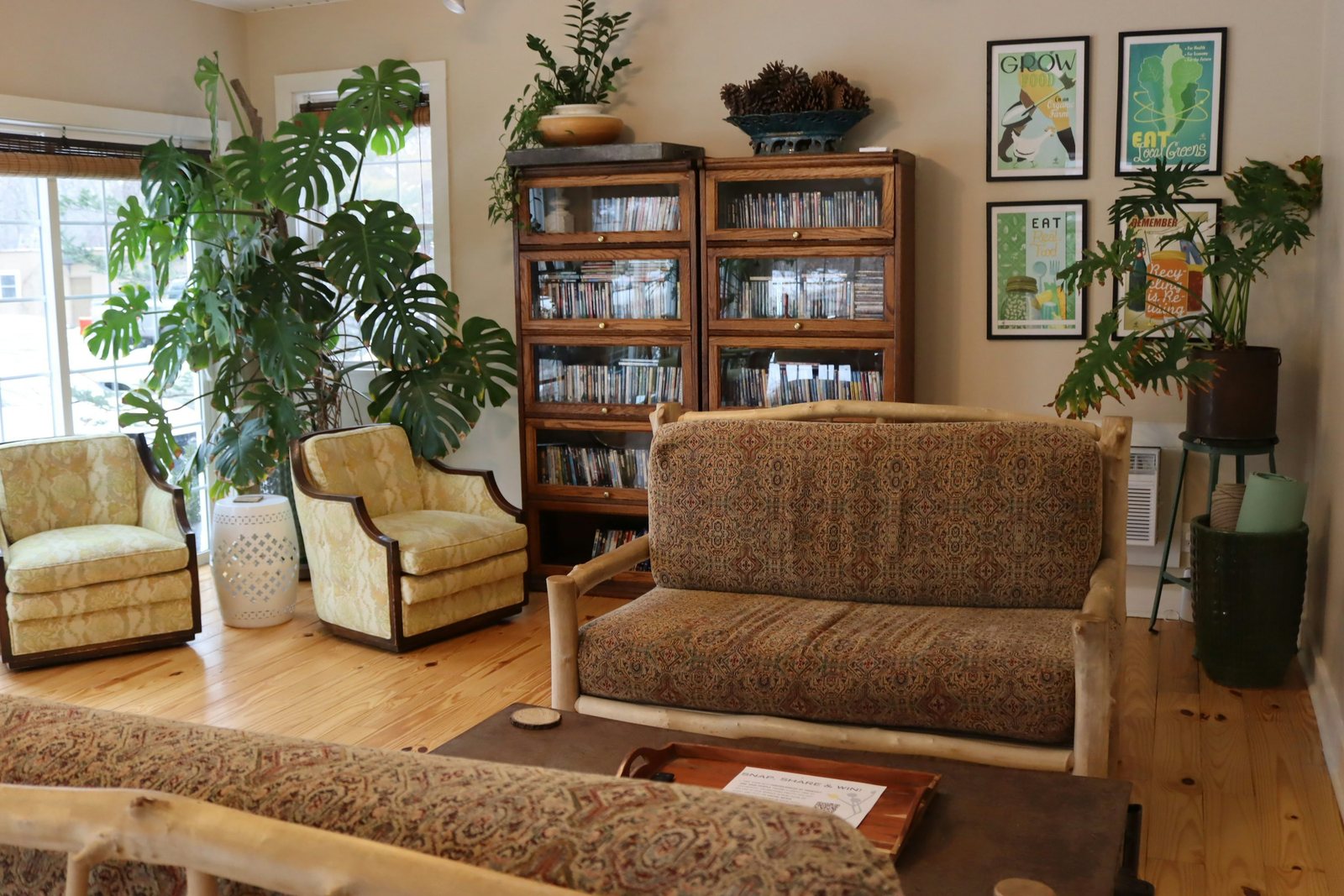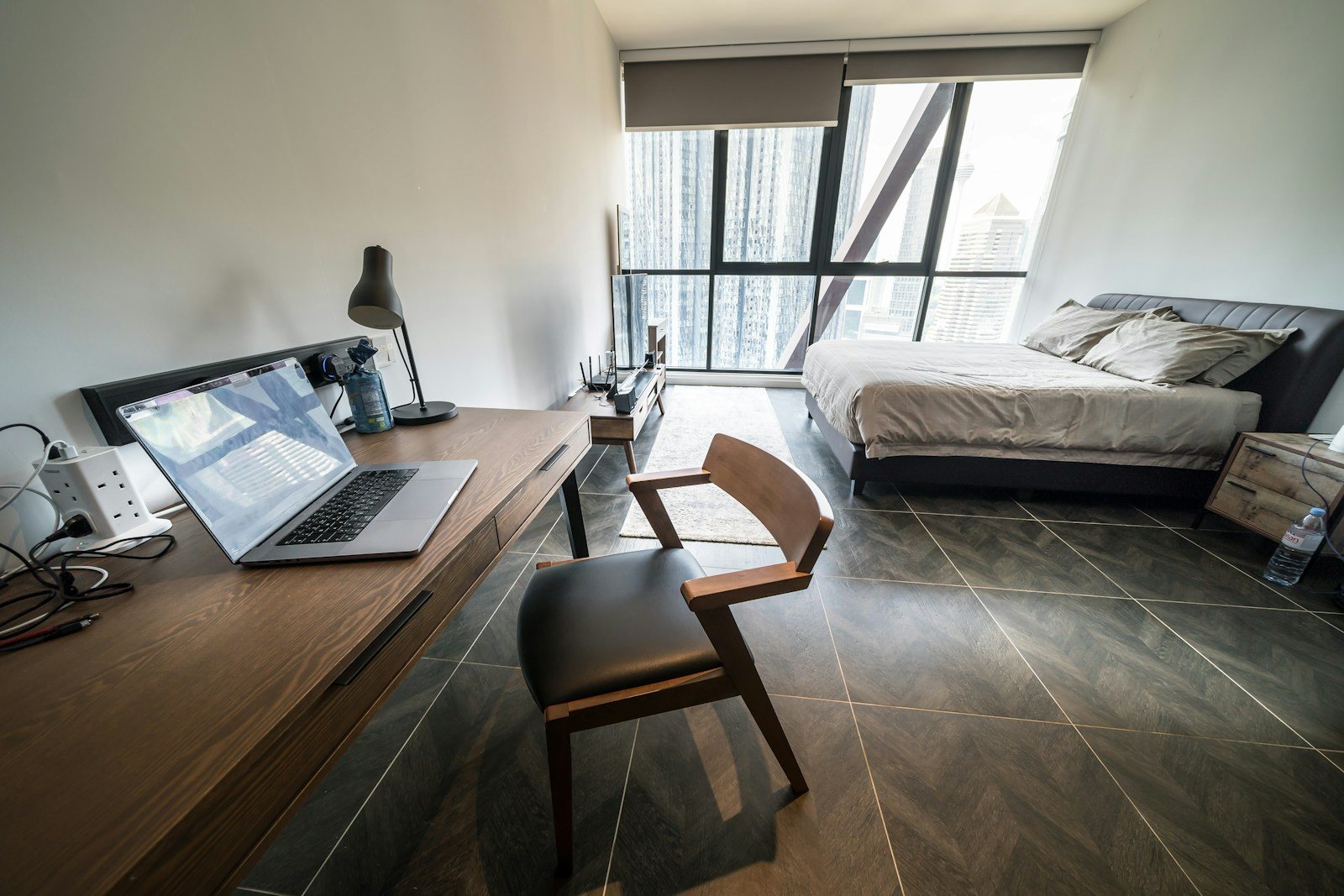
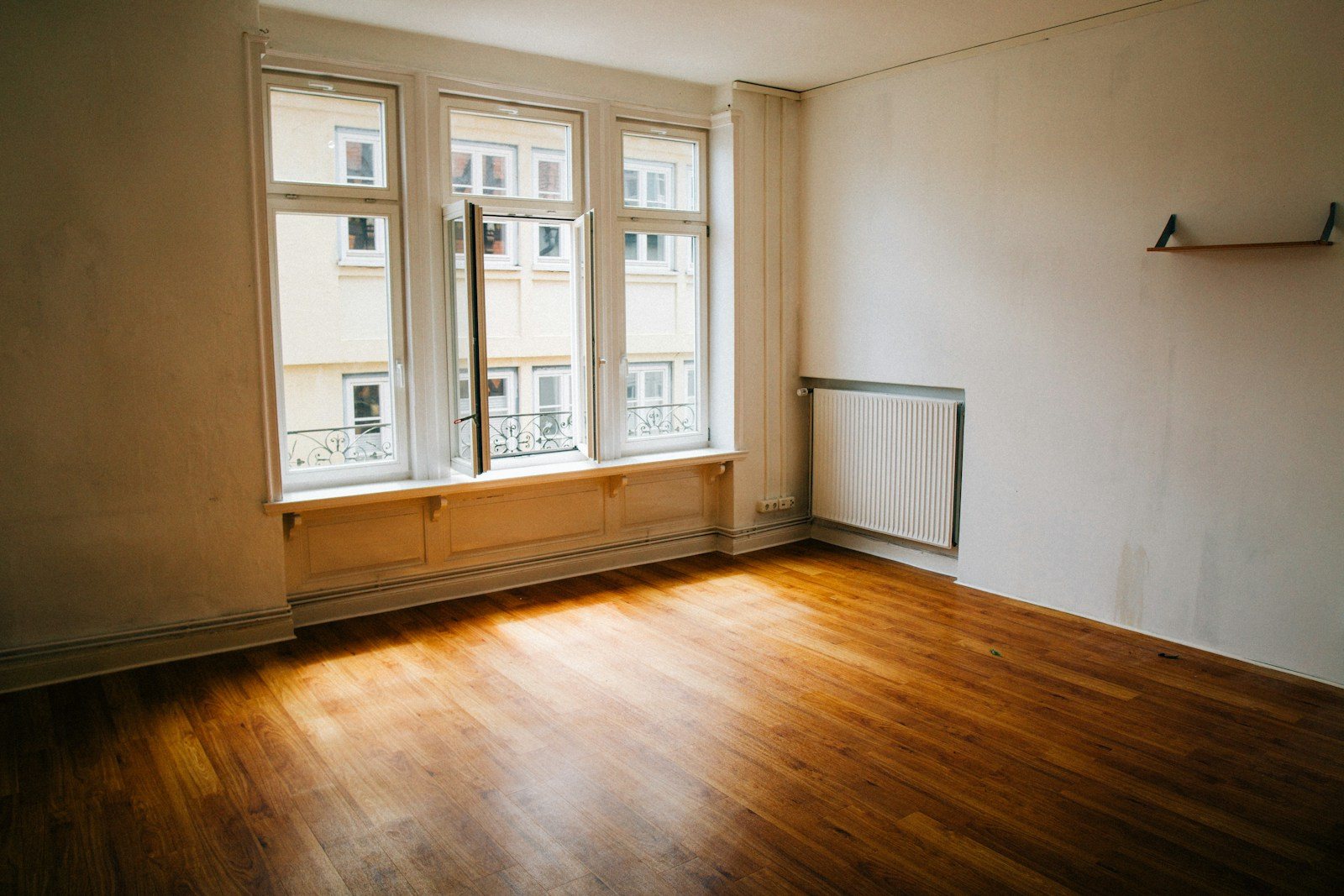
An empty corner can look like an unanswered question. A narrow shelf would fit there. Perhaps a plant stand, a basket, a small chair. Shopping makes the gap easy to name, but it does not establish that the gap is a problem. In a small rental, unassigned space may already be doing quiet work: letting a cupboard open, giving you somewhere to turn with a laundry basket, or allowing the room to accommodate an unusual day. Before filling it, ask what would become harder if it disappeared.
A FEW THINGS TO TAKE WITH YOU
- Distinguish a genuine missing function from discomfort with an unfinished-looking gap.
- Notice temporary uses before assigning a permanent object to the space.
- Give any proposed addition a clear job and a condition under which you would remove it.
The gap may already be working
Furniture has an obvious job because you can point to the object. Empty space is harder to credit. Yet the patch beside a wardrobe may be where you stand while choosing clothes. The area beyond the sofa may be the turn in your route to the window. A corner near the door may let two people enter without colliding with each other's bags. None of these uses leaves an object behind when it is finished.
This is why a photograph can be an incomplete planning tool. It records the room at rest. It cannot show the laundry basket you carried through ten minutes earlier or the cupboard door that needs to open tomorrow. Before treating a blank patch as wasted space, watch the room in motion. The absence of furniture does not imply the absence of a function.
There are three different reasons you might still want to fill it. The first is functional: you need somewhere to put something, and the corner is a plausible location. The second is visual: the room feels uneven or unfinished. The third is emotional: you want to feel settled, and completing the room seems like a way to get there. These reasons can overlap, but an additional storage unit is not equally good at answering all of them.
Write the problem without naming a product. 'The current library books have no home' is a usable brief. 'This side of the sofa looks heavier than the other' suggests trying a visual adjustment with what you own. 'I want the apartment to feel mine' may call for displaying a meaningful object elsewhere rather than filling the only free corner. Naming the discomfort widens the possible answers.
Watch one ordinary week, including its messy moments
Make a note whenever you use the space, including temporary uses. Do you put a suitcase there while packing? Stand there to water an existing plant? Move a chair into it during cleaning? Temporary work counts. A piece of furniture that fits perfectly at rest can still make the room less adaptable.
Also note whether objects accumulate there without a plan. An empty corner that repeatedly fills with deliveries may need a parcel-processing routine, not permanent parcel storage. A laundry pile may point to a hamper in an inconvenient location. Follow the objects back to the moment they arrive. Solving that route can preserve the useful space instead of formalizing the pile with a decorative basket.
The word 'empty' can make a place sound incomplete. 'Available' describes a capability. The floor can be available for opening a suitcase, for a guest's bag during a visit, or simply for moving without negotiating another object. You do not need to invent a daily use to justify every part of the apartment.
Availability still needs boundaries. Do not let a useful open area become the permanent home of whatever has no decision attached to it. Choose a reset point: after unpacking, after guests leave, or before the next workday. The space is allowed to be temporarily occupied and then returned to availability. That is a different arrangement from filling it with a permanent object that itself needs to be moved.
| What you observe | What it might mean | A first response |
|---|---|---|
| People step into the gap to pass | It supports movement | Keep it available |
| A needed object has no suitable home | There may be a storage need | Write a narrow storage brief |
| The gap is unused but looks unbalanced | It may be a visual issue | Try moving an existing object elsewhere in the composition |
| Unsorted belongings keep appearing | The routine lacks a next step | Assign their next destination before adding furniture |
If you add something, give it a job description
An addition can be worthwhile. The point is to choose it for a reason stronger than its ability to fit. Write a short proposal: 'This object will hold ____. It will make ____ easier. It must not interfere with ____. I will reconsider it if ____.' For a reading chair, the answer might involve actual reading time and a usable nearby surface. For a shelf, it should identify the belongings that need a home.
Try the relevant footprint and everyday movements before buying, while keeping doors, windows, vents, and required routes accessible. Do not count inaccessible slivers around a new object as usable space. If the proposed chair would mostly hold laundry, be honest about whether you need another seat or a better clothes routine. A technically fitting object can still be a poor fit for your life.
Let a workable room count as finished
There is no requirement for a room to explain every corner visually. You can have a favorite area with books and texture beside a plain area that gives it room. You can also change your mind later, when a real need appears. Leaving a gap today preserves a choice; it does not commit you to permanent minimalism.
A useful stopping point is simple: the important activities work, belongings have appropriate homes, and moving through the room does not require constant adjustment. If those conditions are met, the awkward corner may not be an unfinished task. It may be one of the reasons the rest of the apartment works as well as it does.
About this guide
This guide provides planning prompts and comparison criteria. It does not report product tests or results from a real household.
This guide offers general home-planning ideas. Product instructions and your own rental agreement take precedence. How we approach our guides.