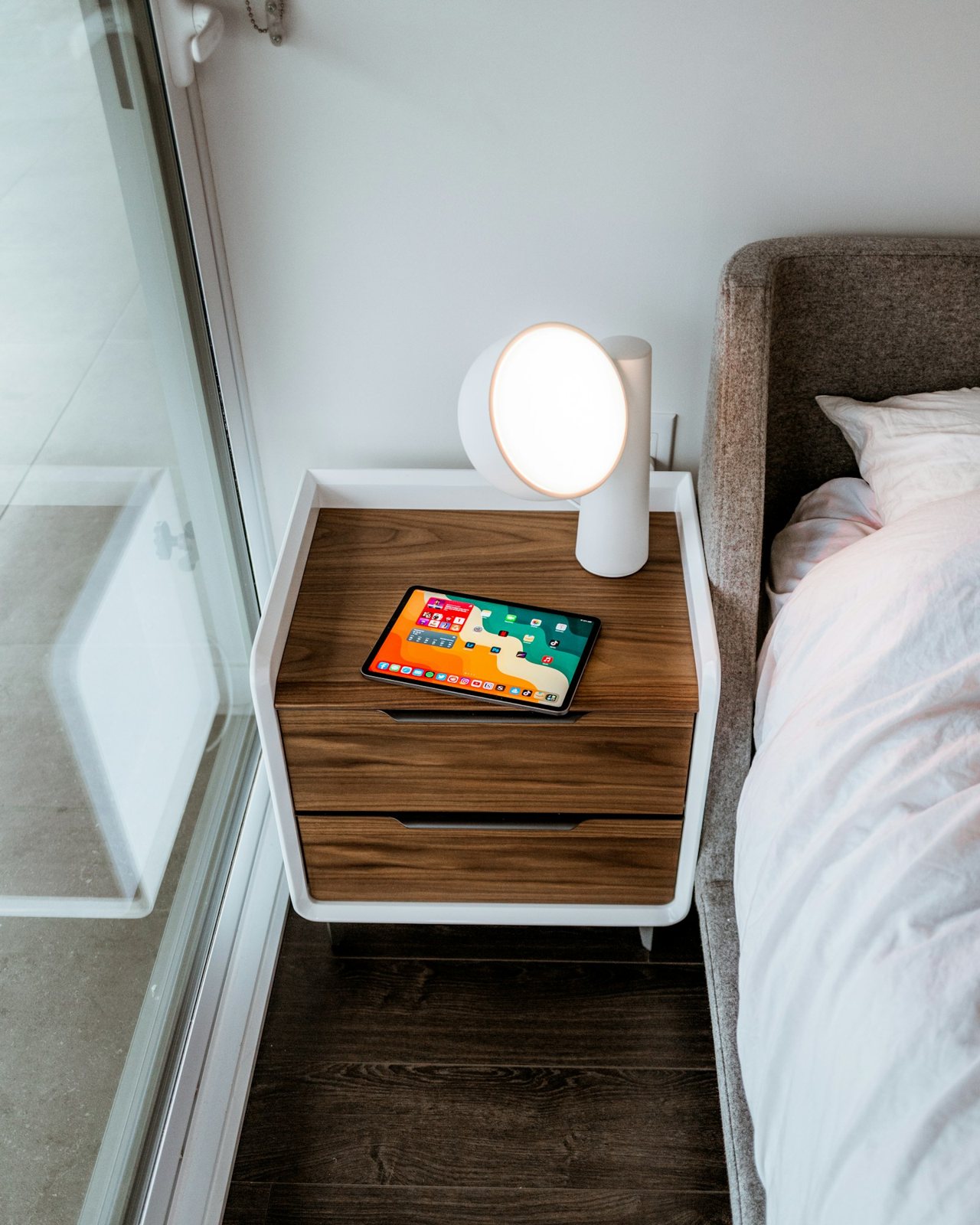
A pair of nightstands can feel like a compulsory part of a bedroom, even when one sits empty and the other collects everything. Before trying to fit a smaller version into an awkward rental, find out what the bedside area really needs to hold. This one-week experiment is not a challenge to live with less. It is a way to distinguish necessary reach, convenient storage, and objects that simply landed there. You may finish with one nightstand, two different arrangements, or no extra furniture at all.
A FEW THINGS TO TAKE WITH YOU
- Keep genuinely needed nighttime items accessible throughout the experiment.
- Record what you reach for, what you put down, and what you never touch.
- Choose each side of the bed around its user's routine; symmetry is optional.
Before you start: protect the things that matter
Keep your existing arrangement if changing it would make important items harder to reach. Accessibility needs, prescribed equipment, and personal health routines take priority over an experiment in furniture. Do not relocate medicines or change their storage based on this article; follow their instructions and any professional advice. The experiment concerns ordinary clutter and furniture choices, not essential care.
For everything else, make a quick inventory. A phone, glasses, water, current book, spare books, receipts, jewelry, hand cream, charger, and lamp might all be present, but they do not necessarily need the same place. Leave required lighting usable and maintain a clear route into and out of bed. Move only manageable loose belongings at first. You can learn what matters without moving furniture on the first night.
Nights one and two: observe, then sort by access
Put a sheet of paper somewhere you can use in the morning. Record what you reached for after getting into bed and what you placed down just before sleeping. Also note anything you wished were accessible. These are different directions of travel: glasses may arrive at bedtime and leave in the morning, while a book may remain all week.
Notice whether a problem is about storage or placement. A drawer full of useful things does little for an object that needs a simple landing surface. A large top may still be inconvenient if the lamp occupies its easiest corner. Resist the temptation to buy a bedside pocket, shelf, or miniature table yet. You are gathering a brief, not matching the contents of a shop.
After two nights, assign each nonessential item to one of three access levels. 'Used at night' deserves more convenient placement than 'used somewhere in the bedroom.' This is why a tidy container of every skincare item may be less helpful than a single item you use before bed, with the rest stored where the routine begins.
The example below is illustrative. Your result might be completely different, particularly if two people use the bed. Make a separate list for each side rather than averaging two routines into a matching pair of tables.
| Access level | Illustrative contents | What the storage needs to do |
|---|---|---|
| Reach from bed | Glasses and the current book | Provide a stable, convenient landing place |
| Reach while standing in the room | Tomorrow's accessories and spare notebook | Use an existing dresser or cupboard area |
| Occasional bedroom storage | Books already finished and spare linens | Live away from the bedside zone |
Nights three to five: test one smaller arrangement
Clear the bedside surface of everything outside the first access level, except any required lighting or equipment. Keep the removed items in a known appropriate home, not an anonymous bag you will have to search. If you already own a suitable smaller piece of furniture, you can compare it with the existing arrangement. Follow its intended use and stability requirements; stacks of books or boxes are not a substitute for a stable table.
If you are considering a purpose-made bedside organizer, check that it is compatible with the bed and the objects it must hold. Do not assume a pocket is suitable for drinks, charging electronics, or every bed frame. A stable surface may be the better answer. This experiment is allowed to conclude that a conventional nightstand performs an important job. The useful change may simply be removing everything that prevents it doing that job well.
Watch what returns, and why
Some items will drift back. Treat that as information. A book returning each evening probably needs a place. Receipts returning because pockets are emptied on the bed suggest a missing destination elsewhere. A second glass returning because the first is forgotten suggests a daily clearing routine, not a larger table. Ask what caused the object to arrive before deciding it deserves permanent bedside space.
Use a simple note: 'Object — arrival moment — next destination.' For instance, 'earrings — changing into sleepwear — existing jewelry box' describes a route. If the box is awkward to access, improve that route. Adding another container beside the bed may create a duplicate system that requires more sorting later.
At the weekend, write a one-sentence furniture brief
Complete this sentence using your observations: 'This side needs a stable place for ____, accessible from ____, plus storage for ____.' Leave the storage blank if it is unnecessary. The brief might justify one small table, an existing dresser within practical reach, or retaining the current nightstand with fewer contents. If new furniture is needed, measure and check it against the real brief rather than shopping for the narrowest object available.
End the experiment once the essential items are accessible, the route around the bed works, and clearing the area is straightforward. The two sides do not have to match. One person may need a larger surface, while the other needs little beyond existing lighting. A bedroom can feel considered because each side works, not because the furniture is identical.
About this guide
This guide provides planning prompts and comparison criteria. It does not report product tests or results from a real household.
This guide offers general home-planning ideas. Product instructions and your own rental agreement take precedence. How we approach our guides.