
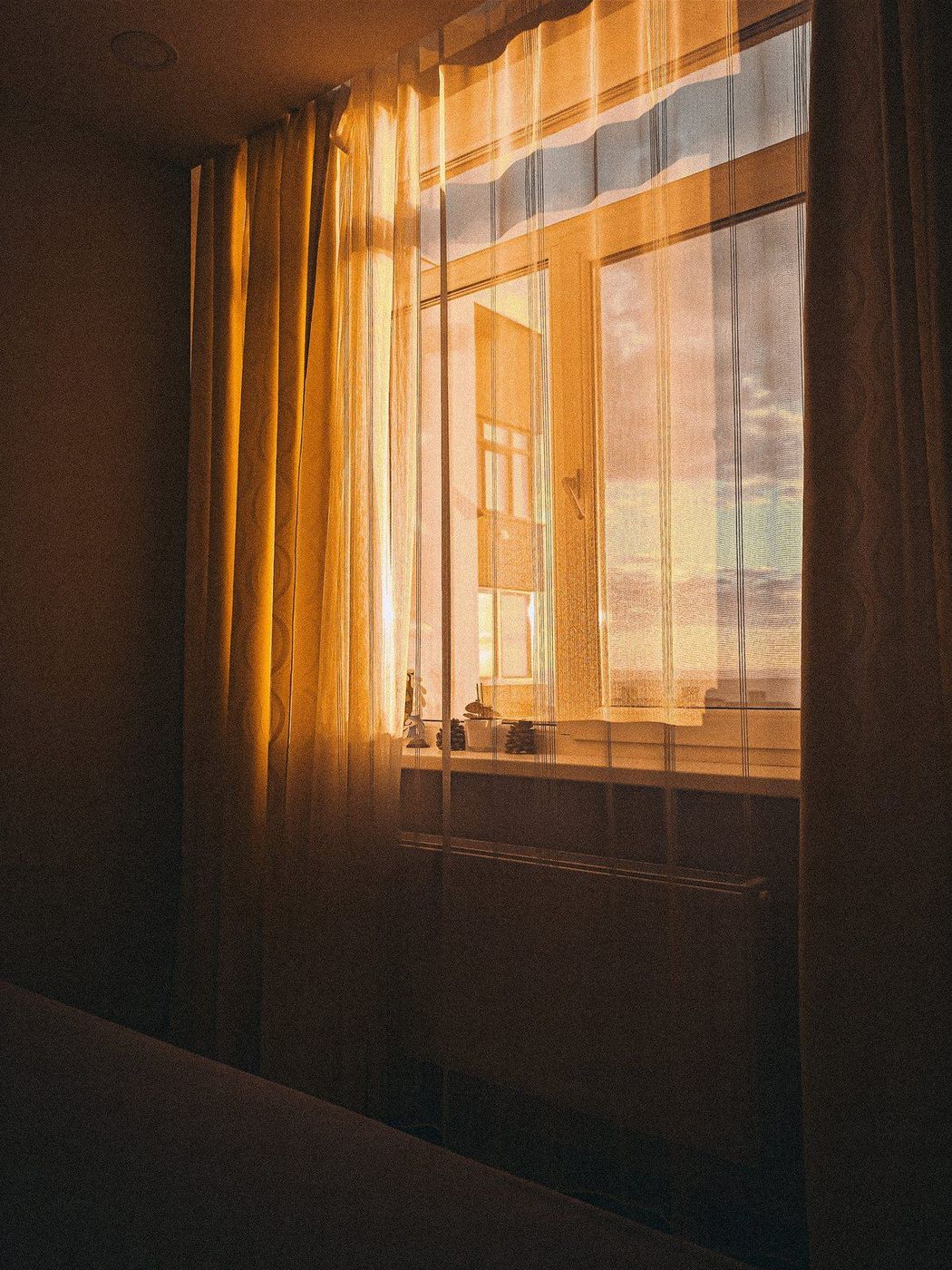
Closing every curtain may solve a privacy problem while creating a room you no longer want to use. Leaving everything open may feel comfortable until the lights come on in the evening. Begin with the specific sightline and time of day that trouble you. That makes it easier to choose a window treatment for your life, rather than copying the curtain length and fullness in a staged photograph.
A FEW THINGS TO TAKE WITH YOU
- Daytime light, evening privacy, and sleep darkness are separate requirements.
- Assess visibility in the conditions you actually need the curtain to handle.
- Check existing hardware, window operation, heater clearances, and cord safety before styling.
What are you trying to hide, soften, or keep?
Write one sentence about the problem. It might be that people on a shared walkway can see your desk, that a nearby window faces your bed, or that afternoon brightness reflects in a screen. Those situations do not necessarily need the same treatment. Also name what you want to keep: the tree outside, a bright reading spot, or an easy way to open the window.
Make the distinction between privacy and darkness explicit. A material that reduces light may still leave silhouettes or gaps you dislike. A dense curtain that gives comfortable evening privacy might be more coverage than you want at breakfast. Product descriptions are a starting point; the meaningful question is what can be seen and how the room feels in your conditions.
Map the window across an ordinary day
Observe morning, the time you use the room most, and evening with your normal lights switched on. From inside, note the sightlines toward public or shared areas. If appropriate, ask a trusted household member to check visibility from a place they are allowed to stand. Do not enter neighboring property or photograph other homes to conduct the check.
Test from the position that matters: seated at the desk, standing while changing, or lying in bed. A view that feels private when you stand close to the window can feel different farther back. Include the gaps at the sides and center of any existing curtain. Often the problem is incomplete coverage rather than the entire fabric choice.
| Moment | Keep | Reduce or block | What to test |
|---|---|---|---|
| Morning | Useful daylight | Direct view of the dressing area | Coverage from the relevant outside sightline |
| Working hours | View and comfortable brightness | Screen reflection | Fabric and curtain position from the chair |
| Evening | A usable lit room | Visibility into the occupied space | Coverage with interior lights on |
| Sleep | Access to the window when needed | Unwanted light | Side, top, and center gaps |
Match the layers to the schedule
If you want filtered daylight and stronger evening privacy, separate those jobs where compatible existing hardware allows it. A light daytime layer and a denser closing layer let you change the room through the day. Do not assume a sheer gives adequate privacy at night; verify the actual view with the room illuminated. If two layers cannot fit safely, prioritize the non-negotiable requirement and consider how you will open the chosen treatment during the day.
If only a small sightline is bothersome, first consider moving the activity within the room. Shifting a desk away from the direct view may preserve more daylight than covering the whole window. Avoid placing furniture where it obstructs window access or an escape route. Changing your position is an option, not an obligation to live awkwardly around an unsuitable window treatment.
The existing rod sets some real limits
Inspect the existing rod or track and identify its intended curtain heading and supported load from the relevant instructions. Ask the property contact if it is loose or its condition is uncertain. Measure from the actual hanging point, accounting for rings or hooks, rather than measuring from the ceiling because a photograph suggests a high curtain looks better.
Check the curtain's movement against handles, opening windows, nearby doors, and furniture. Follow the required clearance for any heater or other equipment beside or below the window. Choose a length that supports those clearances and your cleaning routine. A floor-length puddle of fabric is a styling choice you can decline, especially where it interferes with access or collects the things tracked through the room.
For new rods, tension fittings, or adhesive hardware, verify the exact load, dimensions, surface compatibility, and rental permission. A no-drill label does not establish that a heavy pair of curtains will be supported by your opening.
Resolve cord safety before keeping the old blind
An existing blind may remain behind your new curtains, so include it in the decision. The US Consumer Product Safety Commission recommends cordless window coverings where children live or visit and warns that accessible cords can cause strangulation. Furniture moved near a window to improve a layout can also put a child within reach of cords.
Do not treat an extra curtain as a way to conceal or solve a cord hazard. Discuss unsuitable supplied coverings with the property contact and follow the product's safety instructions. Keep beds, cribs, and climbable furniture away from window-covering cords. A visually tidy arrangement is not evidence that the underlying fitting is suitable.
Choose for the least convenient moment
Before committing, compare the candidates at the hardest time in your schedule: evening privacy, daytime glare, or an early bedtime. Where possible, inspect a sample or a returnable product under the seller's conditions, and check the care label. Include the effort of taking the curtains down, cleaning them, and putting them back on the actual hardware.
Finish with a functional brief: the hours of use, necessary coverage, compatible heading, measured drop, opening clearance, and cleaning method. Let color and texture narrow the options that meet that brief. You will have a window treatment with a reason to be there, even when it is simply doing its job in the background.
Sources & further reading
This guide offers general home-planning ideas. Product instructions and your own rental agreement take precedence. How we approach our guides.