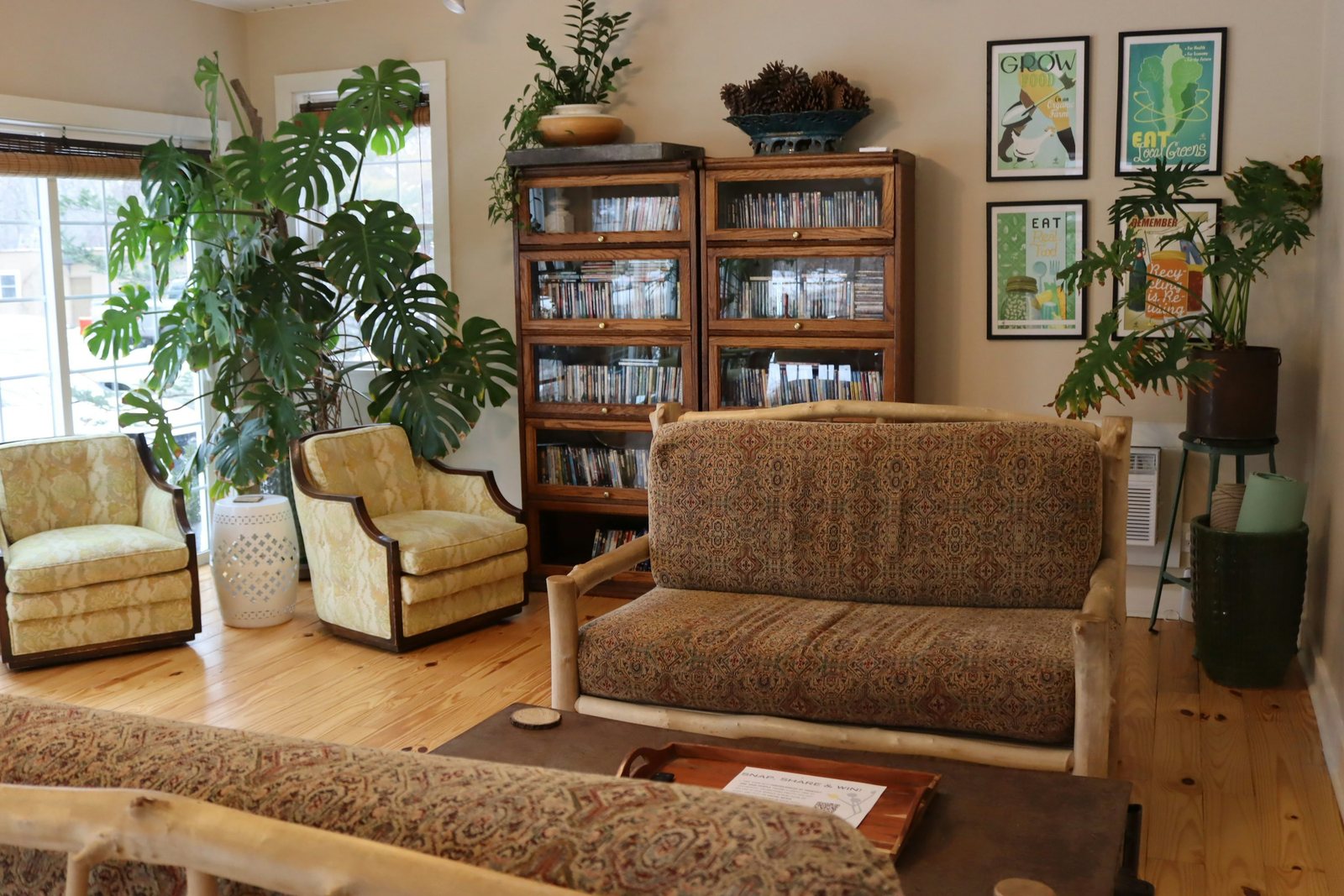
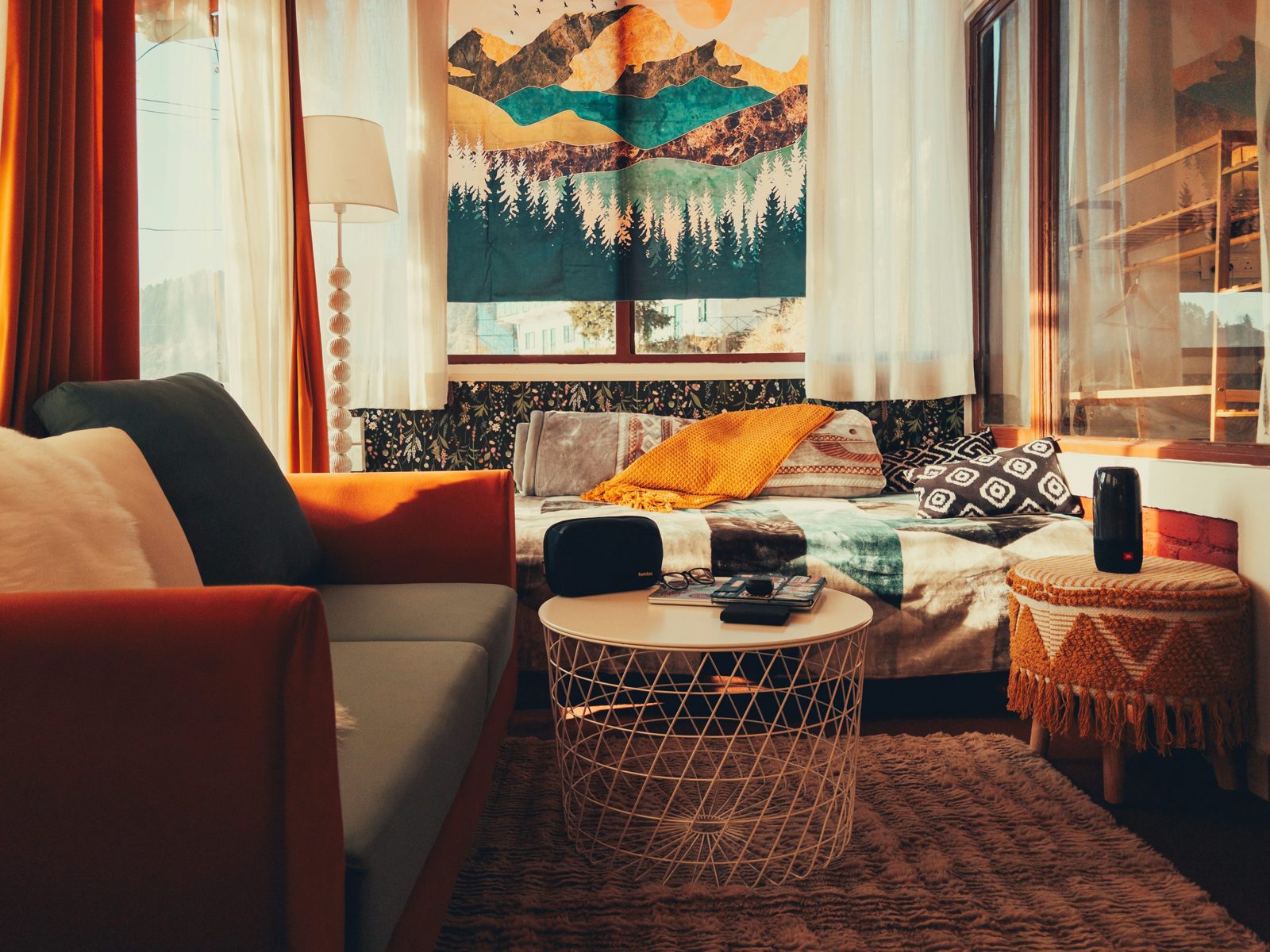
Suppose your next rental living room contains a charcoal sofa, a small brown coffee table, a pale timber cabinet, and a patterned chair you refuse to give up. None came from the same collection. Replacing them all would be expensive and would erase some of what you like. Here is a worked way to give those pieces a relationship, beginning with an invented room so the reasoning stays visible.
The room in this article is an illustrative design exercise, not a client project or a product test.
A FEW THINGS TO TAKE WITH YOU
- A room can feel connected through repeated shapes, colors, or visual weight without matching furniture finishes.
- Give the most distinctive piece a clear role before trying to quiet everything else.
- Use an existing object as a bridge and postpone purchases until you know what remains unresolved.
The starting point: four useful pieces
For this example, the sofa is comfortable and dark, the coffee table is simple and useful, the cabinet holds everyday things, and the chair has a small blue-and-cream pattern. The room has cream walls and a warm wood floor. These details are hypothetical; the exercise demonstrates choices rather than reporting a makeover result. All four pieces stay because they have a job.
The first question is not which item clashes. It is which relationships already exist. The chair's cream connects to the walls. The cabinet and coffee table are both wood, though their colors differ. The sofa and table are visually substantial. Listing those connections prevents the mistake of seeing every difference as a problem that needs a purchase.
Difference is not the same as disorder
Imagine the dark sofa and dark table clustered tightly on one side while the pale cabinet sits alone opposite. The room may feel uneven because of how its visual weight is distributed, not because two wood finishes are incompatible. A layout change could answer that feeling more directly than painting the cabinet or covering the sofa.
Make a small sketch and mark the darkest and largest pieces. See whether one corner carries all of them. Then compare the layout with the room's actual routes and use. Adjust only where function allows. There is no requirement for symmetry: the aim is to understand whether you dislike the furniture itself or merely the particular arrangement you keep looking at.
Let the chair lead
In this exercise, the patterned chair becomes the expressive piece because its owner likes it most. That does not mean buying a blue rug, blue curtains, and blue cushions. It means giving the chair enough space to be read clearly and choosing one or two modest connections to its colors elsewhere. A blue spine in an existing stack of books may be enough.
The sofa can stay quieter. The cabinet can remain visibly different from the coffee table. When every piece is required to make an equally strong statement, it becomes hard to understand the room. Assigning roles allows contrast to remain: one feature, several useful supporting pieces, and room for ordinary belongings that were never chosen as decor.
| Piece in the example | Role | First adjustment to try |
|---|---|---|
| Blue-and-cream patterned chair | Personal focal piece | Keep its outline visible and remove nearby competing pattern |
| Charcoal sofa | Comfortable background | Try one existing light textile beside it |
| Brown coffee table | Everyday working surface | Keep enough of its top clear for actual use |
| Pale timber cabinet | Storage and a quieter display | Use a small dark object to echo the sofa across the room |
Find one bridge instead of four replacements
A bridge is an existing object that relates to more than one part of the room. In the example, a cream textile with a fine dark stripe could connect the wall color and sofa. An artwork with brown, blue, and cream could relate to the table, chair, and walls. These are possible directions, not missing products you now need to buy.
Search your own belongings first. Place a candidate in the room and notice whether it clarifies the relationships or simply adds another busy object. Sometimes the bridge is a shape: the curved back of the chair and a round bowl on the cabinet. Sometimes it is a repeated dark detail. Exact color matching is only one possible tool, and often the least forgiving when shopping from photographs.
Leave the two wood finishes alone for now
The pale cabinet and brown table remain different in this first version. That preserves a useful piece and avoids starting a refinishing project before establishing that the finish is the problem. If the room still feels unsettled, compare the cabinet's surroundings: an overloaded top, a dense wall display, or several unrelated storage baskets may be doing more visual work than the wood color.
Take two photographs from the same position, one before a small adjustment and one after. Use them to compare the relationship you intended to change, then sit in the room without the camera. A photograph can help you notice a cluster; it cannot decide whether your favorite chair is comfortable or whether your cabinet is easy to use.
Translate the example into your own room
Write down the pieces that stay, why each stays, one connection that already exists, and the object you most want to enjoy. Then identify the smallest change that could strengthen a relationship: move an artwork, repeat a color already present, give a distinctive piece more breathing room, or reduce the clutter around a quiet one. Change only that relationship first.
Keep any remaining shopping brief specific. You might need a washable textile with both a light and dark element, rather than an entirely new style. You might need nothing after the arrangement changes. A collected room becomes convincing when the objects feel considered together, not when its history has been replaced by a matching set.
About this guide
This guide provides planning prompts and comparison criteria. It does not report product tests or results from a real household.
This guide offers general home-planning ideas. Product instructions and your own rental agreement take precedence. How we approach our guides.